Running Online and Digital Safety Training for Transgender Folks During Pride
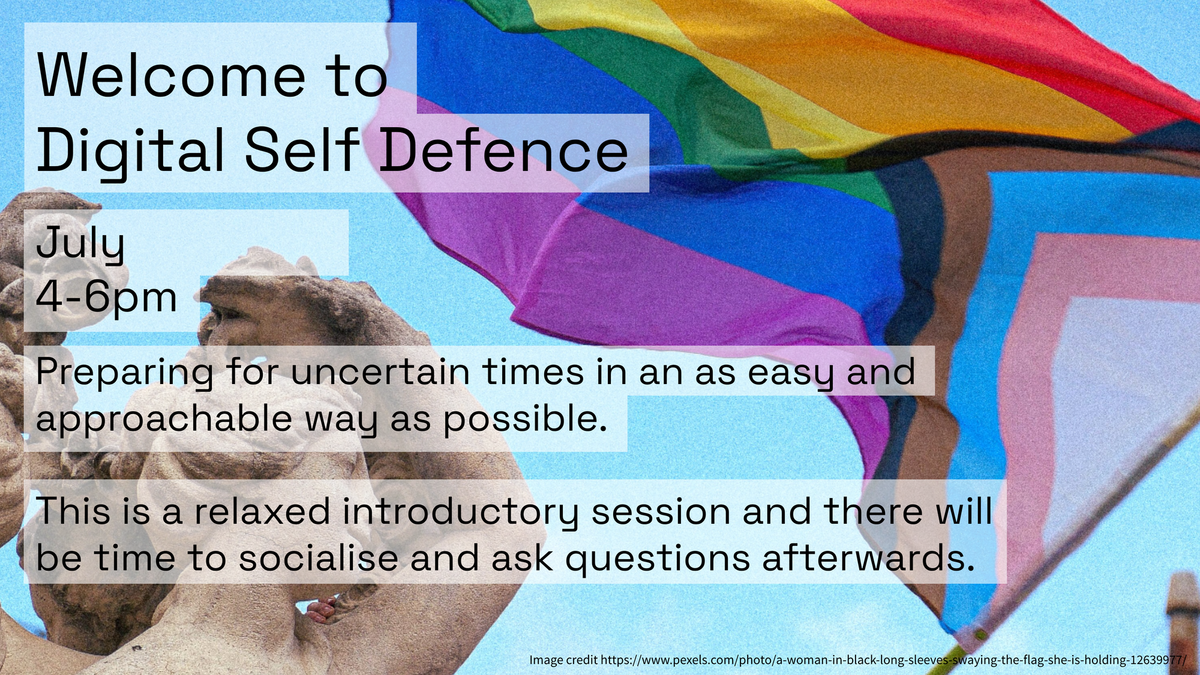
In July 2026 Eriol, a designer and community facilitator who is a Lockdown Systems collective member, organized and ran a three hour online digital safety training for transgender and other marginalized gender identifying folks as part of UK’s Pride month.
Eriol was joined by three other people, all who work in digital and physical security and safety and technology. We were asked to build out a “beginners guide to digital online safety as a Transgender person.” While none of us had formal training in delivering training, workshops, and classes of this nature, we wanted to show up as best we could for our marginalized community and pass on useful knowledge, processes, tools and protocols .
The attendees requested a focus on protecting social media and online conversations they are having about sensitive topics like politics. This was where Cyd can help.
We split our training into three sections. The first hour was the quickest and most critical tips and advice we prioritized. The second hour focused on when your digital identity and activity and real-world identity can ‘clash’ with each other. And lastly, we went into depth on digital and environmental surveillance technology, communications, encryption and avoiding harassment.
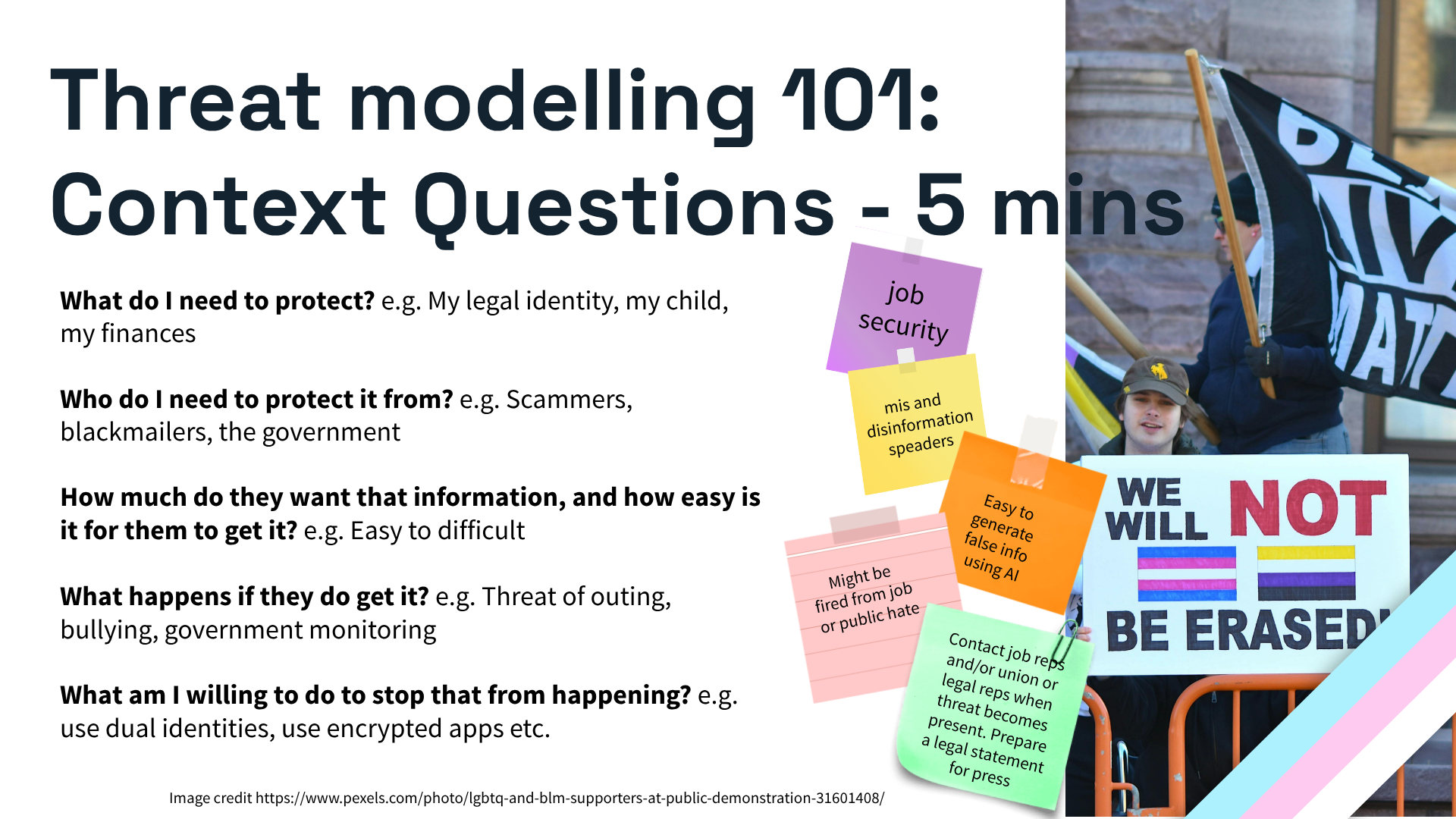
One of the most valuable exercises we took attendees through at the end of that first hour was a mapping activity called threat modeling. This is where people take stock of their lives and assess what can be done to mitigate threats. We based our threat modeling off of some fantastic resources created for NGOs, activist organizations and journalists. The resources used were Digital Defense Fund’s Threat Modeling learning resource and Frontline Defenders Security Workshop.
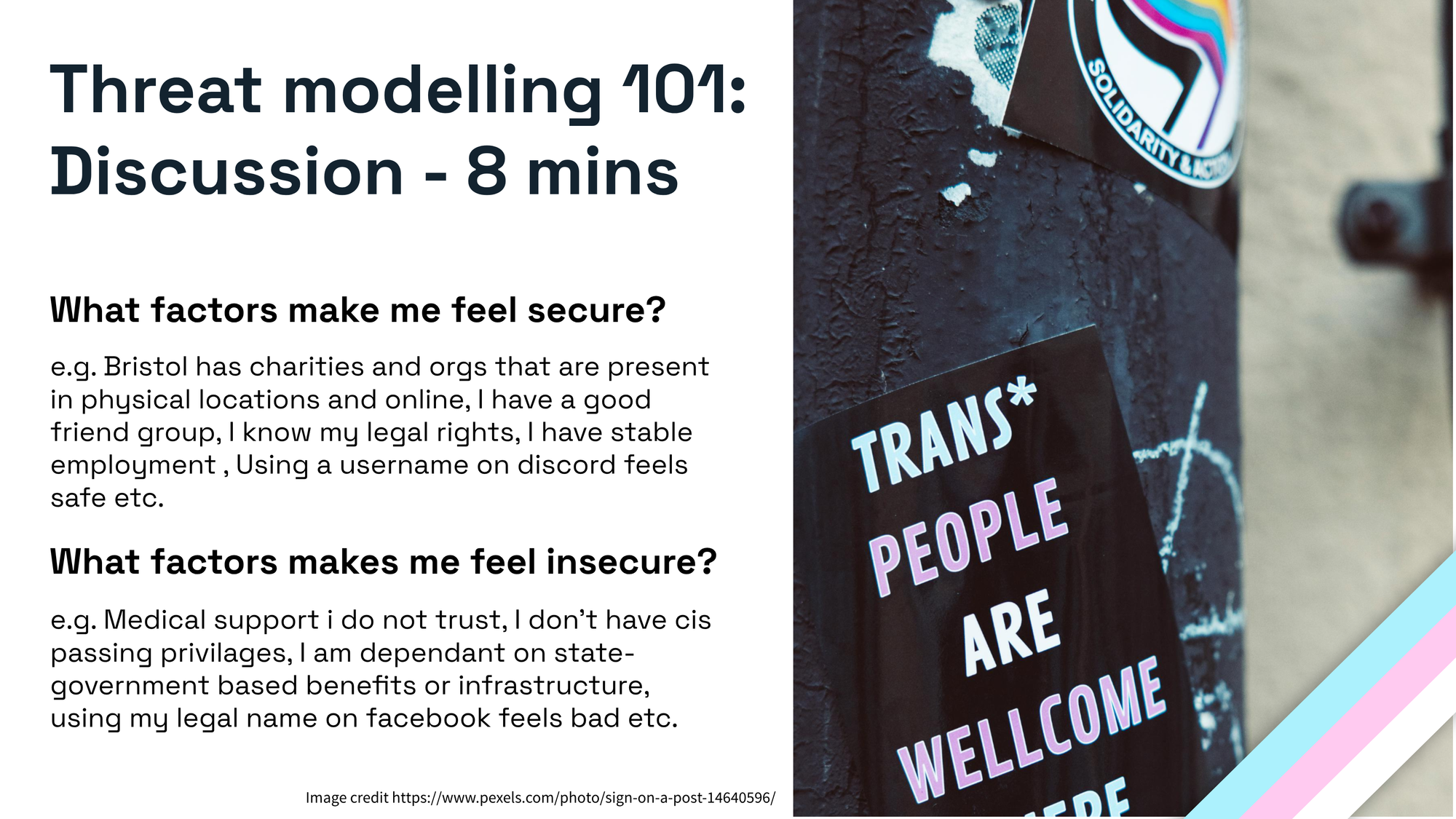
Threat modeling, in this context, allows people to step back from the panic they may feel about being under surveillance and harmed online by bad actors. It encourages them to think about what resources and support they have access to, and to assess and understand their vulnerabilities should they be hacked or attacked.
For people that are not familiar with high risk work like journalism, activism and NGO work, it can be surprising and horrifying to think your online communication and identity can be weaponized by not only bad-faith individuals, but also governments and institutions. It’s also increasingly unclear what happens to your data once you’ve used the internet to communicate.
Attendees of this workshop were regular people, some who have a detailed knowledge of tech and few that have experienced direct harms for speaking truth to power via journalism. They were overwhelmed and fearful of who was monitoring their online lives and what was being done with the data. Attendees also worried about the level of technical skill needed to protect themselves, which was alleviated when they saw that many tools had usable interfaces and good guides available.
As marginalized identities, Transgender and LGBTQIA+ folks often do not have the option to communicate offline (often due to no safe, in-person, like-minded community or friends so online is their only option) for sensitive conversations that involve politics and polarized public opinion. Everyone deserves access to the free and open internet and also protection from those that wish to harm marginalized folks and silence them.
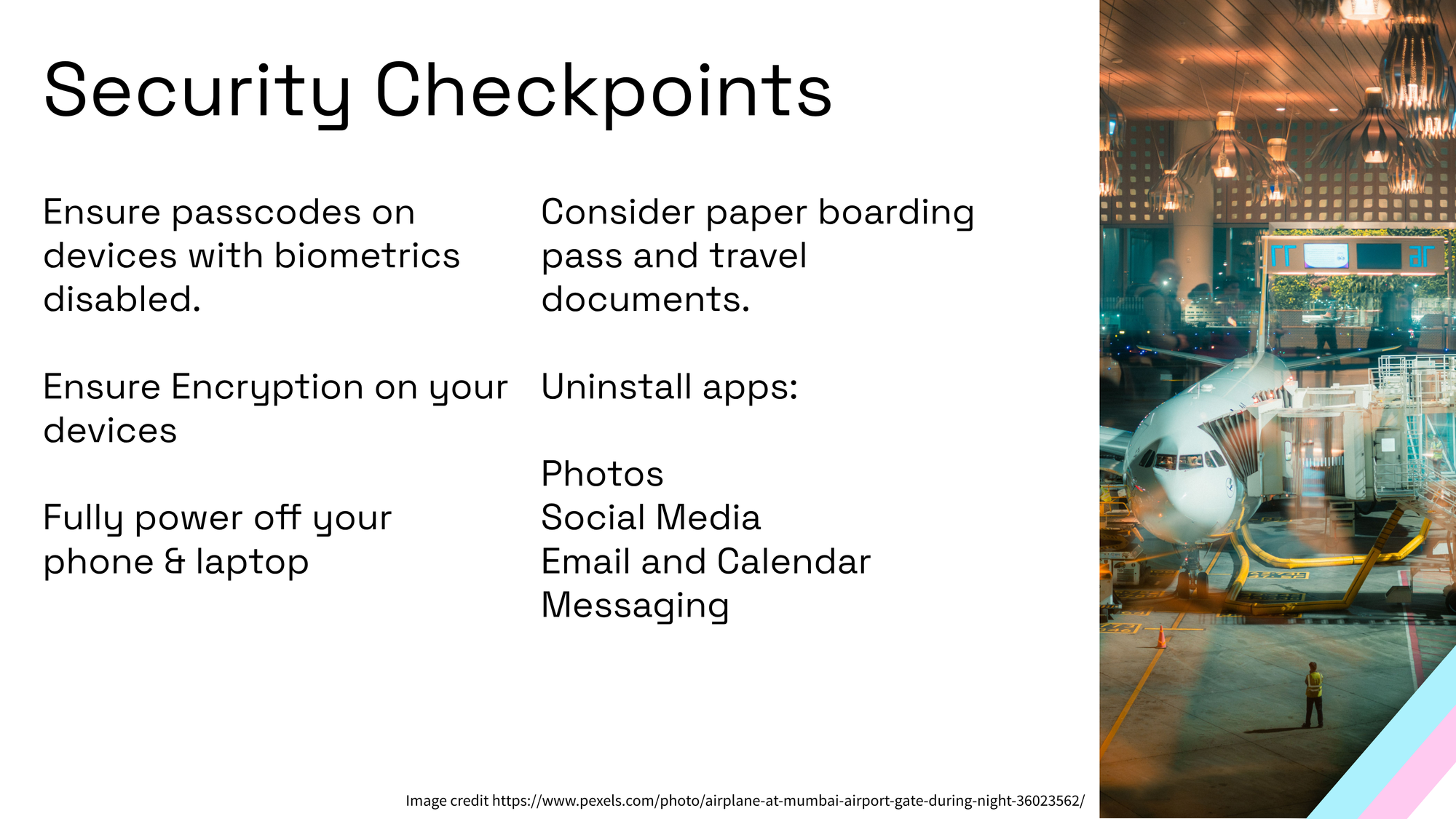
The folks at the workshop found our tool, Cyd one of the most useful tools among the varied guides and tools we took them through. This became most clear when we spoke about travel, both nationally and internationally, and about being able to maintain an online identity where you can engage in topics that are sensitive but relevant to a critical topic while also keeping a separate ‘regular’ identity that allows you to participate in society (work, school, online government services, travel etc.).
Big tech companies and platforms that watch and collect our online activity are now, more than ever, able to sell this sensitive and personal information to institutions and people that can harm us. Staying safe while still communicating with each other keeps marginalized communities connected, and Cyd enables those people to reclaim there data while choosing to remain active online.
This safety training only scratched the surface of what people, marginalized identities or otherwise, need to remain informed and protect themselves in ways that they decide are appropriate. The attendees of this workshop were most concerned about how quickly and effectively their online identity can be connected to their legal identity – especially when they go through processes of name and ID changes – and what can be picked up by which authorities and companies as they go through these processes.
Finally, they were very concerned about street-level surveillance in the built environment and city that can overwhelmingly monitor and oppress marginalized identities and communities and their social activities, that may or may not become stigmatized and possibly criminalized in the future.